
How to Choose the Right New Home Builders in Auckland (Complete Guide for 2026)
Building in Auckland After Covid
Since Covid, the construction industry has shifted and been forced to recalibrate. Material costs moved quickly and, in some cases, unpredictably. Regulations tightened, and a lack of competition in certain parts of the market is still present today.
Yet despite all of that, one thing hasn’t changed. Houses still need to be built.
So where does that leave the homeowner?
In most cases, it pushes them toward the most visible and easiest metric to compare, the price. It makes sense. When everything feels uncertain, the bottom line becomes something tangible to hold onto. Two quotes side by side, one lower than the other, and it feels like a clear decision.
But the reality is much more complex than that.
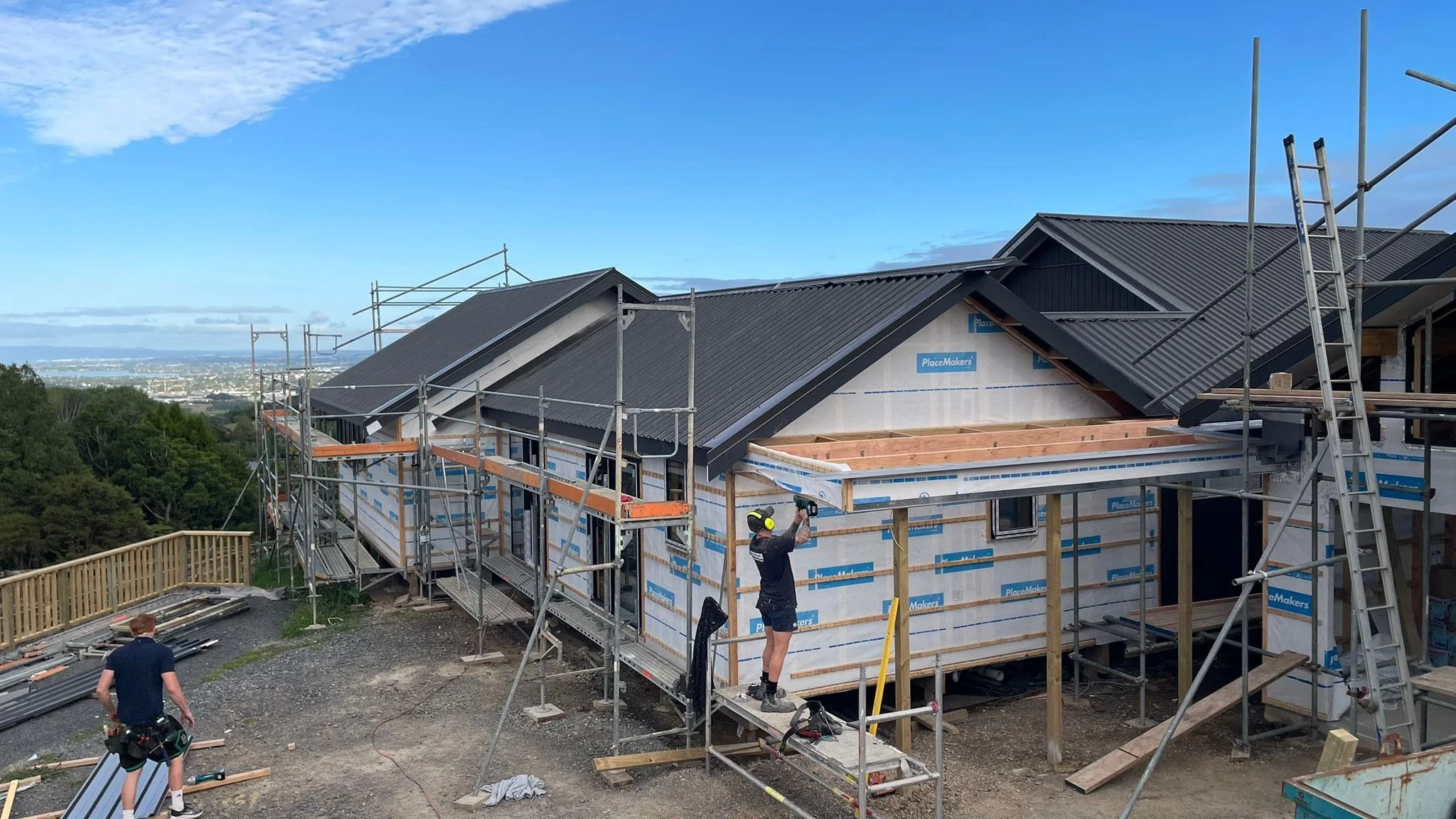
Why Price Isn’t the Full Picture
Price is only one part of the build, and often not the part that determines how successful the project actually is. What sits behind that number, the assumptions, the level of detail, the builder’s process, and the quality of coordination, is where the real differences lie.
The challenge is that these things are harder to see. They don’t present themselves as cleanly as a total at the bottom of a page. They show up later, through how smoothly the project runs, how issues are handled, and whether the end result actually matches what was expected.
So before tying everything back to price, it’s worth stepping through the parts of the process that actually shape the outcome.
Choosing the Right Building Company
The first, and most important, is choosing the right building company.
In Auckland, your builder is not just responsible for constructing the home. They are responsible for how the entire project runs. That means experience alone is not enough. What you are really looking for is proven delivery.
A builder might have completed projects, but that doesn’t automatically mean those projects were well managed. You need to understand how they performed when things weren’t perfect, because no build ever is.
This is where testimonials and real project history matter. Not just polished photos, but evidence that they can consistently take a project from start to finish without it drifting off course. Were timelines managed properly? Were costs handled transparently? Did the client know what was happening throughout the build?
From there, you need to understand how they operate day to day. A well-run building company will have structure behind it. That usually means a dedicated project manager, someone who is responsible for coordinating trades, managing sequencing, and keeping communication clear between all parties.
It is also worth understanding whether they have worked closely with architects and consultants before. Many Auckland homes are not simple, off-the-shelf builds. They involve detailed design, site-specific challenges, and higher expectations around finish. A builder who is comfortable in that environment will identify issues early and manage them properly.
Ultimately, what you are trying to avoid is becoming the learning curve. A newer building company might be well priced, but without a proven track record of delivering well-managed projects, that price often comes with uncertainty.
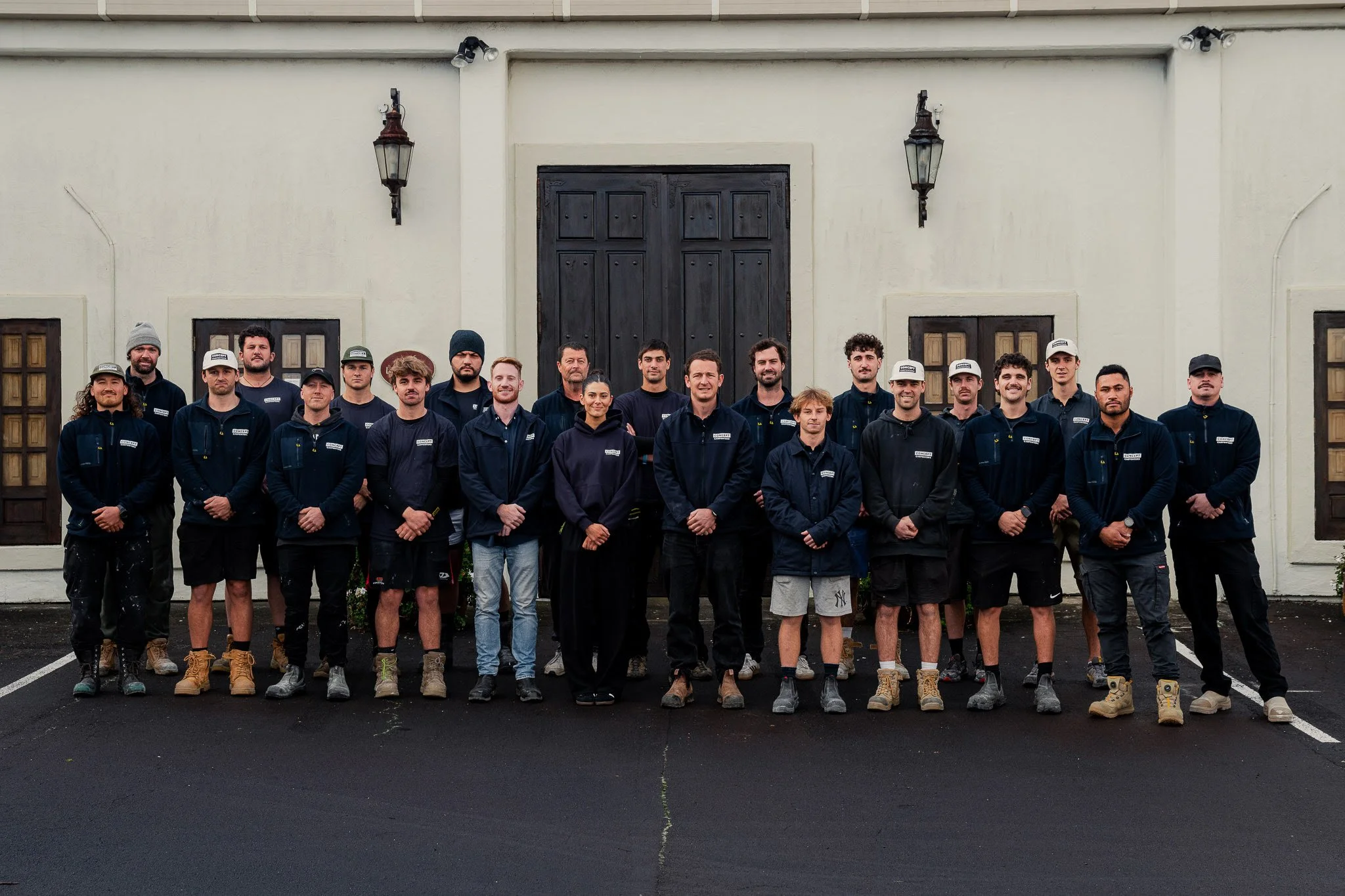
Understanding What You’re Actually Being Quoted
Once you have confidence in the builder, the conversation naturally comes back to price, but this is where it needs to be handled carefully.
Two quotes can look similar on the surface, but be built very differently underneath. One may include detailed allowances and realistic selections, while another may rely on assumptions that haven’t been fully tested yet.
At first glance, one looks cheaper. Over time, that gap can close quickly, or even reverse.
A lower price is not always a cheaper build. In many cases, it simply means more of the cost is still to come.
The Work That Happens Before the Build Starts
A lot of cost control happens before the build even begins.
Selections, specifications, and design decisions all play a major role in the final cost. Bathrooms, kitchens, and higher-end finishes in particular require coordination across multiple trades, and changes made later in the process tend to be more expensive and more disruptive.
Stronger builders push to resolve as much detail as possible early. Not to slow things down, but to remove uncertainty. Because once construction is underway, flexibility decreases and the cost of change increases.
What Happens During the Build
From there, the focus shifts to what happens on site.
A home is not built by one person, it is built through a sequence of trades that all need to align. Plumbers, electricians, waterproofers, tilers, painters, all working in order, often under tight timeframes. If that sequencing breaks down, delays follow, and delays often carry cost implications.
This is where the builder’s systems and experience become visible. A well-managed project feels controlled, even when challenges arise. A poorly managed one feels reactive, with issues being dealt with after they have already had an impact.
Communication plays a major role here as well. Even on the best-run projects, things will come up. What matters is whether those things are communicated clearly and early, or whether they are discovered later when options are limited.
Bringing It Back to Price
By the time you reach this point, the price starts to look different.
It is no longer just a number to compare. It becomes a reflection of how much has been resolved upfront, how well the project is likely to be managed, and how much risk still sits within the build.
The cheapest price may still be the right option in some cases. But more often, the right choice is the builder who has removed the most uncertainty from the process.
Because in residential construction, uncertainty is where cost lives.
